Sun City Summerlin: Inside Vegas's Original 55+ Community
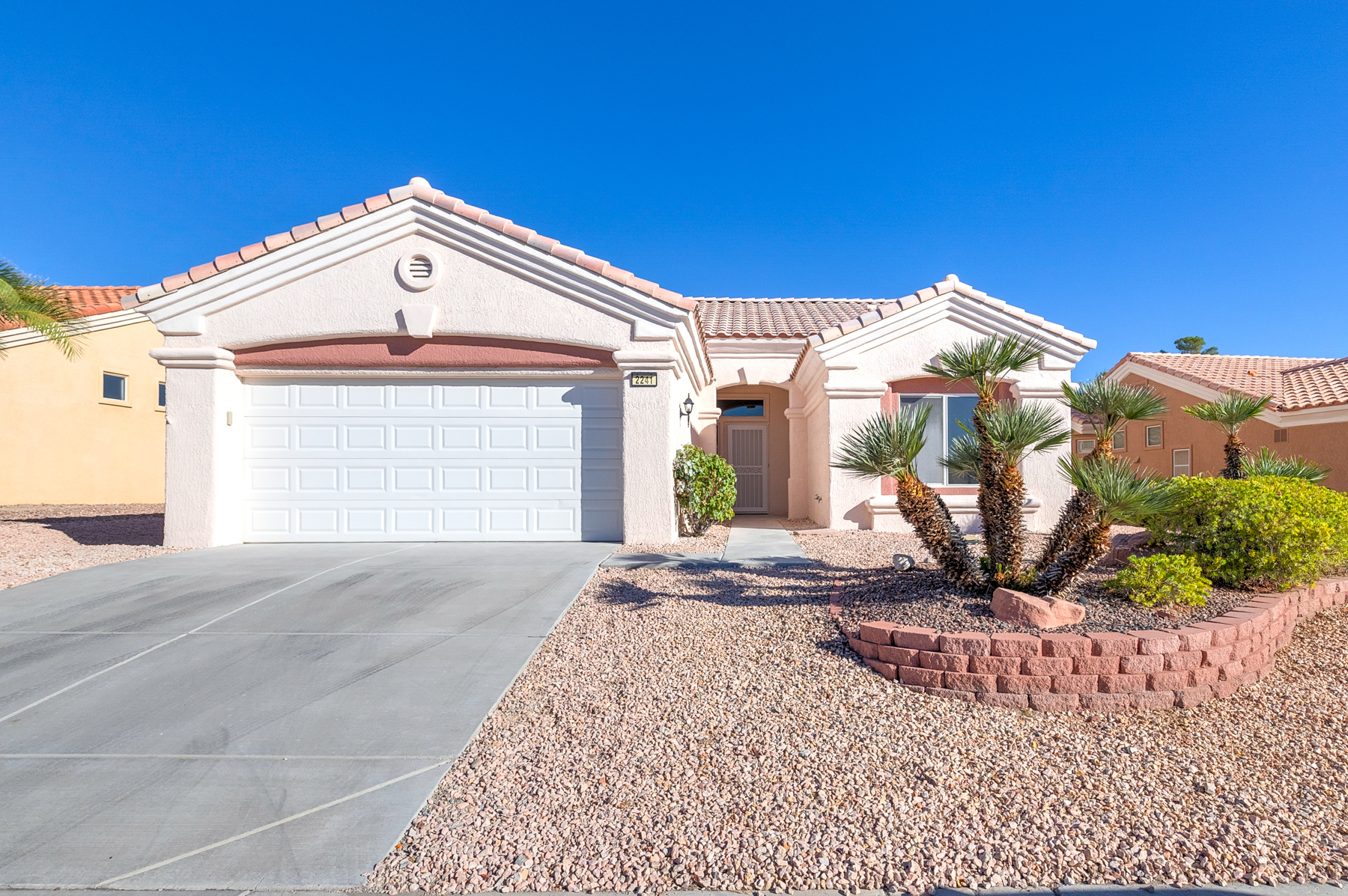
Sun City Summerlin is the quietly beating heart of Vegas retirement living — the 7,800-home Del Webb original that set the template every other 55+ community in this valley copied, and it still has a waiting-list feel three decades after the first roof went on.
I’ve been writing real estate in this town since the gates of Sun City Summerlin opened in 1989, and I can tell you something the brochures never will: the people who buy here don’t just want a house. They want their last move. They want a community that already figured out how to grow old in style — the trails, the clubs, the country clubs, the neighbors who’ll actually wave back. That’s a different buyer than the one chasing a brand-new build out east, and it shows up in everything from how the streets curve to how the homes hold value when the broader market wobbles.
Tonight I want to walk you through what locals actually say about Sun City Summerlin — the stuff you don’t hear on a 30-minute model-home tour.
The Layout: A City Inside a City
Sun City Summerlin sits on the northwest edge of Las Vegas, tucked up against the Spring Mountains where the city ends and Red Rock begins. From the air it looks like a giant green ribbon — three championship golf courses (Highland Falls, Eagle Crest, Palm Valley) winding through cul-de-sacs, with four community centers anchoring the corners. Roughly 13,000 residents call it home. That’s a small Nevada town inside one ZIP code.
The original developer, Del Webb, built this place to be self-contained the way a college campus is self-contained. You’ve got fitness centers, indoor and outdoor pools, woodworking shops, ceramics studios, computer labs, a 525-seat performing arts theater, restaurants, even a library branch — all within the gates, all without driving out to Charleston Boulevard. For a buyer in their late 60s who’s thinking about the next 20 years, that walkable infrastructure is the entire pitch.
The Homes: Single-Story, Smart, and Holding Their Ground
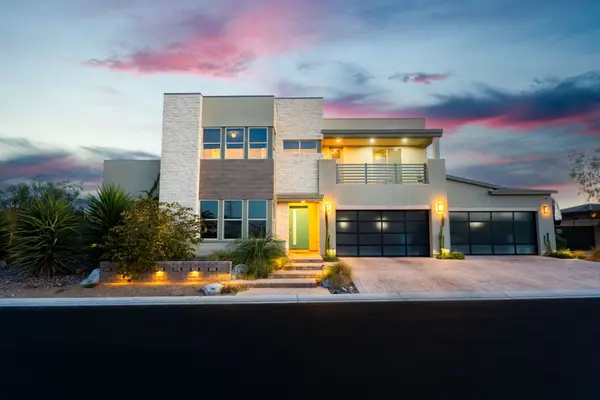
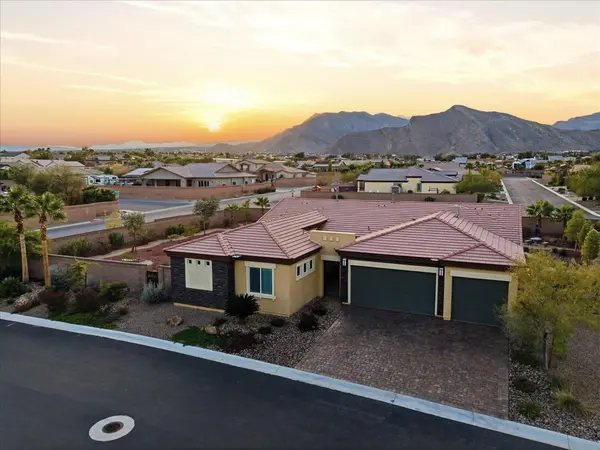
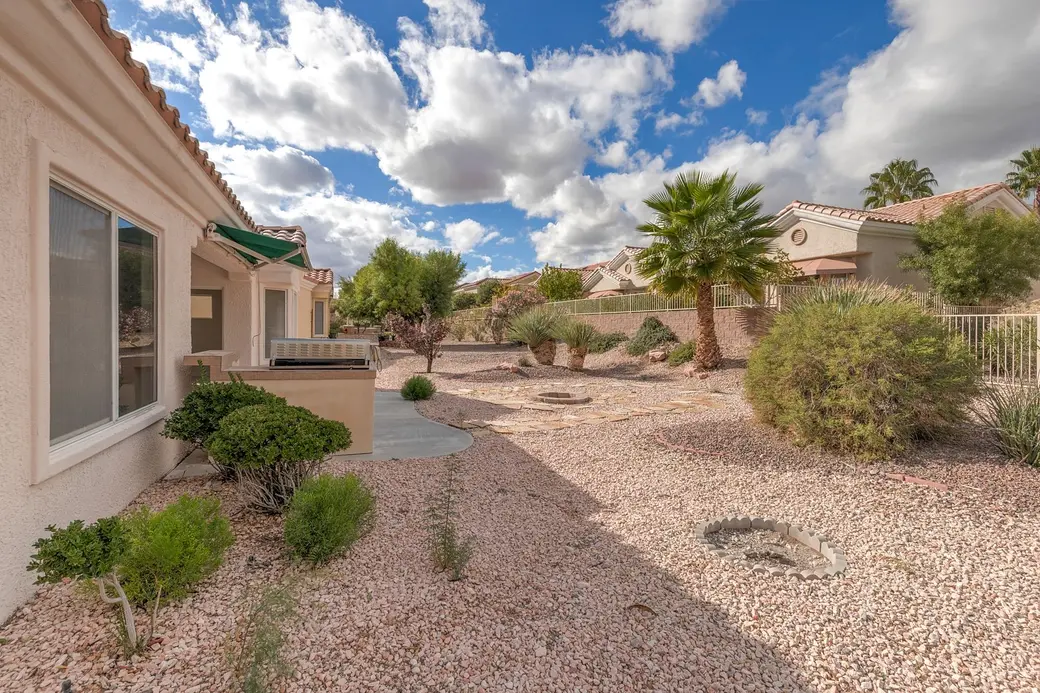
Sun City Summerlin is overwhelmingly single-story. That was deliberate. Del Webb’s research said retirees would trade square footage for not having to climb stairs, and 30 years later the data’s still right — single-story homes in Sun City Summerlin command a noticeable resale premium over the rare two-story pockets.
Floor plans run from compact 1,200-square-foot patio homes (the “villas”) up to roughly 3,000-square-foot custom golf-course homes on the back nine. Pricing in 2026 has stabilized in a band most buyers don’t expect: villas in the high $300s to low $400s, mainstream single-family homes from the mid $400s to the high $500s, and golf-course or remodeled showpieces stretching to $800k–$1.1M. There are even a handful of two-story custom builds along the perimeter that have crossed $1.4M when they’ve been gutted to the studs.
What surprises out-of-state buyers: many of these homes are still original-floor-plan with the late-’90s tile and oak cabinets. That’s opportunity, not a problem. A $60k–$90k cosmetic remodel here typically returns $90k–$130k of resale value because the bones, the lot, and the location are already paid for. I’ve walked clients through that math three times this quarter alone.
The Lifestyle: What Locals Actually Do All Day
Here’s the part the listing photos can’t show. There are over 80 chartered clubs inside Sun City Summerlin — pickleball, ballroom dance, woodworking, photography, billiards, an actual writers’ group, a quilting guild that has been meeting every Tuesday since 1992. The pickleball scene alone has 1,000+ members and produces tournament-grade players who travel.
The community centers (Mountain Shadows, Desert Vista, Pinnacle, Sun Shadows) each have their own personality. Pinnacle is the “flagship” — bigger gym, indoor lap pool, fitness classes seven days a week. Mountain Shadows skews artsy and has the theater. Locals tend to pick a home based on which center they want to walk to, not the other way around.
Then there’s the golf. Three courses, all open to residents at preferred rates, all built into the original Del Webb plan. If you’re a golfer, this is one of the few master-planned communities in the country where you can actually walk from your driveway to a fairway without crossing a major road.
HOA, Fees, and the “What’s the Catch” Conversation
Every Sun City Summerlin tour I run, the same question lands by minute 20: what are we really paying? The HOA assessment is currently around $1,560–$1,700 per year (paid quarterly) — and for the first-time master-planned buyer that number sometimes triggers sticker shock. Until I walk them through what it covers: all four community centers, the staffed fitness facilities, the 80+ clubs, the security patrol, all the common-area landscaping, and the underlying infrastructure that keeps property values steady.
Compare that to a brand-new 55+ community two exits east, where the HOA can run $2,400–$3,200 a year and the amenities are still being built. Sun City Summerlin’s real moat is that the amenities are already there, paid for, and being used by 13,000 of your future neighbors every day.
Who Sun City Summerlin Is Actually Right For
It’s right for the buyer whose top three priorities are walkable amenities, single-story living, and a built-in social runway. It’s right for the relocator coming in from California or the Pacific Northwest who wants the sun-drenched Vegas lifestyle without the Strip-adjacent chaos. And it’s right for the local Henderson or Las Vegas resident who’s downsizing from a two-story family home and wants to be surrounded by neighbors in the same chapter of life.
It’s not the right fit if you have school-aged kids in the home (it’s an age-restricted community — at least one resident must be 55+, and no one under 19 can live there permanently), or if you want a Strip view from your backyard, or if you’re hunting for a brand-new construction smell. For those buyers, I steer toward Sun City Anthem in Henderson or Trilogy in Summerlin’s newer Stonebridge village.
What Locals Won’t Tell You at the Welcome Center
Three things I tell every Sun City Summerlin buyer that the sales office won’t:
First, the lots that back to the Highland Falls golf course on the north loop hold value better than almost any other lot in the community — even better than the homes with strip views. Second, the original Phase 1 homes (built 1989–1992) often have larger lot sizes than the later-phase builds because Del Webb tightened the density curve as the project sold out. And third, every “remodeled” listing should be inspected for the original galvanized supply lines — a lot of the cosmetic flips skip that, and you don’t want to find out at year three.
This is the kind of stuff that doesn’t fit on a Zillow listing page. It’s the difference between buying a house in Sun City Summerlin and buying the right house in Sun City Summerlin — and over a 15-year hold, that delta is real money.
Want results like this in Vegas or Henderson? Let’s talk. — Javier Mendez, The TMT Collective
Javier Mendez | The TMT Collective
Cell / Text: 702-241-0909
Direct Email: Javier@thetmtcollective.com
Free Home Evaluation: valuemyvegashome.com
Categories
- All Blogs (202)
- (2)
- Cost-of-Living-in-Las-Vegas-vs-Henderson--The-Real-Numbers (4)
- Daily Las Vegas Housing Market Report (9)
- Green Valley Inspirada Anthem Seven Hills Downtown Henderson (7)
- Henderson Neighborhoods (49)
- Henderson Neighborhoods Moving to Las Vegas Relocation Buyer Guides (8)
- Henderson Neighborhoods Pros and Cons Relocation Buyer Guides (13)
- Henderson Neighborhoods Relocation Buyer Guides Living in Las Vegas (8)
- Henderson Neighborhoods Relocation Buyer Guides Pros and Cons (8)
- Henderson Neighborhoods Relocation Buyer Guides Pros and Cons (6)
- Las Vegas Living (2)
- Las Vegas Neighborhoods (30)
- Las Vegas Neighborhoods Living in Las Vegas Relocation Buyer Guides (3)
- Las Vegas Neighborhoods Pros and Cons Relocation Buyer Guides (15)
- Las Vegas Neighborhoods Relocation Buyer Guides Pros and Cons (6)
- Las Vegas Neighborhoods Pros and Cons Relocation Buyer Guides (5)
- Las Vegas Real Estate Tips (21)
- Las Vegas Real Estate Tips Moving to Las Vegas Las Vegas Neighborhoods (4)
- Las Vegas Real Estate Tips Moving to Las Vegas Relocation Buyer Guides (1)
- Living in Las Vegas Relocation Buyer Guides Cost of Living (2)
- Luxury Market Henderson Neighborhoods Pros and Cons (2)
- Luxury Market Las Vegas Neighborhoods Pros and Cons (2)
- Market Education Henderson Neighborhoods Relocation Buyer Guides (2)
- Market Education Moving to Las Vegas Las Vegas Real Estate Tips (2)
- Market Education Moving to Las Vegas Relocation Buyer Guides (3)
- Market Education Relocation Buyer Guides Moving to Las Vegas (2)
- Moving to Las Vegas (2)
- Moving to Las Vegas Living in Las Vegas Relocation Buyer Guides (2)
- Moving to Las Vegas Relocation Buyer Guides Living in Las Vegas (2)
- Relocation Buyer Guides (29)
- Relocation Buyer Guides Cost of Living Moving to Las Vegas (2)
- Relocation Buyer Guides Henderson Neighborhoods Living in Las Vegas (2)
- Relocation Buyer Guides Henderson Neighborhoods Moving to Las Vegas (2)
- Relocation Buyer Guides Las Vegas Neighborhoods Henderson Neighborhoods (4)
- Relocation Buyer Guides Living in Las Vegas Cost of Living (1)
- Summerlin Real Estate (2)
Recent Posts