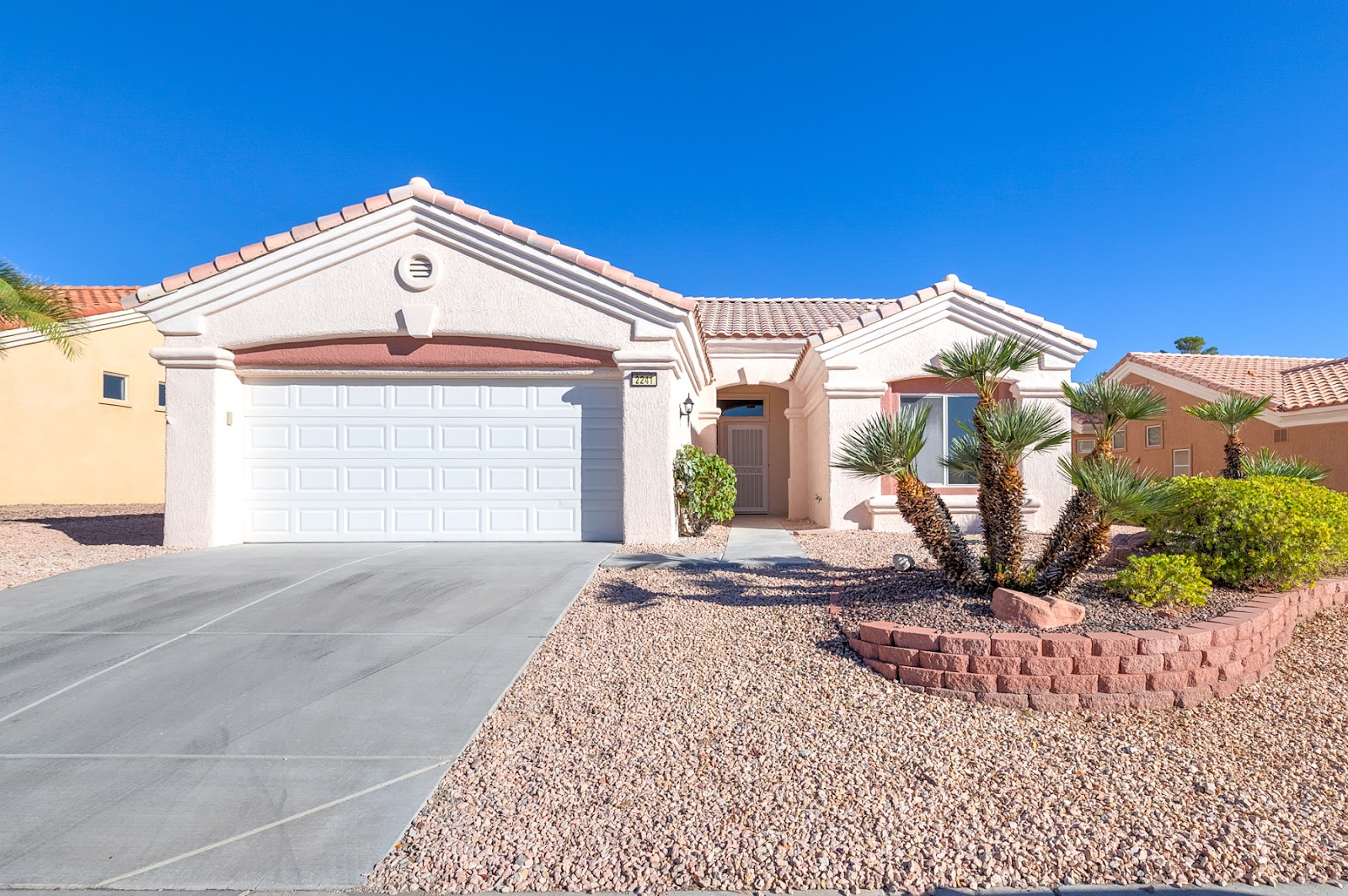
Buying a Home in Las Vegas in Late 2026: How Far Below List to Offer When 59% of Homes Close Under Asking
Buying a home in Las Vegas in late 2026 is a negotiation again: 59% of homes in the city closed below list price in September, and nearly half of today's listings have already taken a price cut.
I've been licensed since 1993 and I've sold more than 1,800 homes in this valley. I've watched buyers overpay in hot markets and I've watched them leave money on the table in slow ones because they didn't know they had leverage. Right now they have it. The trick is knowing how much, on which house, and how to ask for it without blowing up the deal.
What the Numbers Say About Buyer Leverage Right Now
Start with the big picture. Las Vegas REALTORS reported a single-family median of $475,000 in October 2026, up just 0.1% from a year earlier. Condos and townhomes came in at $279,000, down 2.1%. Prices are flat. They are not crashing, and anyone telling you to wait for a 20% drop isn't reading the data.
What changed is the balance of power. Southern Nevada now has nearly six months of supply, compared with just over four and a half a year ago. At the end of October there were 8,112 single-family homes listed without offers, up 7.6% year over year. Total sales for the month were 1,895, with home sales down 11.9% and condo and townhome sales down 23.6%.
Now drill into closed deals. Nevada Real Estate Group's analysis of MLS closings inside the City of Las Vegas shows:
- 59.1% of September 2026 closings sold below list price (61.3% a year earlier). Only 16.8% sold above list.
- The citywide sale-to-list ratio was 98.8%, on 1,437 closings with a $435,000 median.
- Median time from listing to contract was 28 days in September; provisional October data shows 33.
- Of the 8,144 active listings on November 11, 45.6% have already cut their price, 54% have been on the market 60 days or longer, and the median active listing has sat for 66 days.
Read that last line again. More than half of what you'll tour has been sitting for two months. Those sellers have watched the showings dry up. That is your opening.
How Much Below List Should You Offer?
Here's the uncomfortable part: the average discount is small. A 98.8% sale-to-list ratio on a $450,000 asking price is about $5,400 off. If you expect 10% off every house, you'll lose the good ones and waste three months.
The money is in the spread between homes. A fresh, well-priced listing in a tight pocket can still pull full price or better. A house that's been sitting 70 days with two price cuts is a different conversation. Here's how I coach buyers to sort them:
- New listing, priced right, multiple showings: offer close to list and win on terms, such as a clean inspection period, a fast close or flexibility on the seller's move-out.
- 30 to 60 days, one price cut: start a few percent under list and ask for a credit toward closing costs or a rate buydown.
- 60-plus days, multiple cuts, vacant: this is where real negotiation happens. Make a confident offer below list, backed by the comps, and let the seller counter.
Every offer should be anchored to closed comparable sales, not the asking price. The asking price is the seller's opinion. The comps are the market's verdict.

Price Cut or Seller Credit? Run the Monthly Math
With the 30-year fixed averaging just above 7% in Freddie Mac's weekly survey this month (7.11% for the week of November 12), the structure of your discount matters as much as its size.
On a $450,000 home with 20% down at 7.11%, principal and interest run about $2,422 a month. Every $10,000 you knock off the price saves you roughly $54 a month. That's real, but it's slow money.
A seller credit of the same $10,000 aimed at a rate buydown can cut your payment more in the early years, depending on what your lender quotes. A credit toward closing costs keeps more cash in your pocket on day one. The right answer depends on how long you plan to own, how much cash you have, and whether you expect to refinance. Get your lender to price all three options before you write the offer, not after.
One more data point that shapes negotiation: cash buyers made up 26.2% of October sales. About one in four of your competitors can close without a loan. If you're financing, a strong pre-approval and a short, clean timeline make your offer look closer to cash.
For Buyers: Five Moves That Win Deals in This Market
- Get fully underwritten pre-approval. Sellers with a stale listing will take a lower number from a buyer they trust to close.
- Ask for the listing history. Days on market, every price change and any canceled contracts tell you how motivated the seller is.
- Use the inspection as information, not ammunition. Ask for repairs on real defects. Nickel-and-diming cosmetic items is how deals die.
- Bundle your asks. One clean counter with price, credit and timeline lands better than three rounds of back-and-forth.
- Know your walk-away number before you tour. Emotion is the most expensive thing in a real estate transaction.
For Sellers: What Buyers Are Reading on Your Listing
If you're selling, every buyer agent in town can see your days on market and your price history. With 45.6% of listings already cut, a home priced above the comps doesn't look aspirational; it looks like the next price reduction. Price to the closed sales, prepare the home properly, and decide in advance which concessions you're willing to offer. A planned credit beats a panicked cut in week ten.

Bottom Line
Las Vegas prices are flat, inventory is at its highest level in years, and most closings are landing below list. That doesn't mean every house is a bargain. It means the buyer who studies the comps, reads the listing history and structures the offer around the monthly payment will pay less than the buyer who doesn't. The leverage is there. You have to use it with precision.
Sources: Las Vegas REALTORS October 2026 report (as reported by FOX5 and News 3, Nov. 6, 2026); Nevada Real Estate Group November 2026 market report, City of Las Vegas MLS data (September 2026 closings; active listings as of Nov. 11, 2026); Freddie Mac Primary Mortgage Market Survey. Payments are principal and interest only and are estimates, not a loan quote.
Want results like this in Vegas or Henderson? Let's talk. — Javier Mendez, The TMT Collective
Javier Mendez | The TMT Collective
Cell / Text: 702-241-0909
Direct Email: Javier@thetmtcollective.com
Free Home Evaluation: valuemyvegashome.com
Categories
- All Blogs (239)
- (2)
- Cost-of-Living-in-Las-Vegas-vs-Henderson--The-Real-Numbers (4)
- Daily Las Vegas Housing Market Report (9)
- Green Valley Inspirada Anthem Seven Hills Downtown Henderson (7)
- Henderson Neighborhoods (57)
- Henderson Neighborhoods Moving to Las Vegas Relocation Buyer Guides (8)
- Henderson Neighborhoods Pros and Cons Relocation Buyer Guides (13)
- Henderson Neighborhoods Relocation Buyer Guides Living in Las Vegas (8)
- Henderson Neighborhoods Relocation Buyer Guides Pros and Cons (8)
- Henderson Neighborhoods Relocation Buyer Guides Pros and Cons (6)
- Las Vegas Living (2)
- Las Vegas Neighborhoods (43)
- Las Vegas Neighborhoods Living in Las Vegas Relocation Buyer Guides (3)
- Las Vegas Neighborhoods Pros and Cons Relocation Buyer Guides (15)
- Las Vegas Neighborhoods Relocation Buyer Guides Pros and Cons (6)
- Las Vegas Neighborhoods Pros and Cons Relocation Buyer Guides (5)
- Las Vegas Real Estate Tips (33)
- Las Vegas Real Estate Tips Moving to Las Vegas Las Vegas Neighborhoods (4)
- Las Vegas Real Estate Tips Moving to Las Vegas Relocation Buyer Guides (1)
- Living in Las Vegas Relocation Buyer Guides Cost of Living (2)
- Luxury Market Henderson Neighborhoods Pros and Cons (2)
- Luxury Market Las Vegas Neighborhoods Pros and Cons (2)
- Market Education Henderson Neighborhoods Relocation Buyer Guides (2)
- Market Education Moving to Las Vegas Las Vegas Real Estate Tips (2)
- Market Education Moving to Las Vegas Relocation Buyer Guides (3)
- Market Education Relocation Buyer Guides Moving to Las Vegas (2)
- Moving to Las Vegas (2)
- Moving to Las Vegas Living in Las Vegas Relocation Buyer Guides (2)
- Moving to Las Vegas Relocation Buyer Guides Living in Las Vegas (2)
- Relocation Buyer Guides (33)
- Relocation Buyer Guides Cost of Living Moving to Las Vegas (2)
- Relocation Buyer Guides Henderson Neighborhoods Living in Las Vegas (2)
- Relocation Buyer Guides Henderson Neighborhoods Moving to Las Vegas (2)
- Relocation Buyer Guides Las Vegas Neighborhoods Henderson Neighborhoods (4)
- Relocation Buyer Guides Living in Las Vegas Cost of Living (1)
- Summerlin Real Estate (2)
Recent Posts